
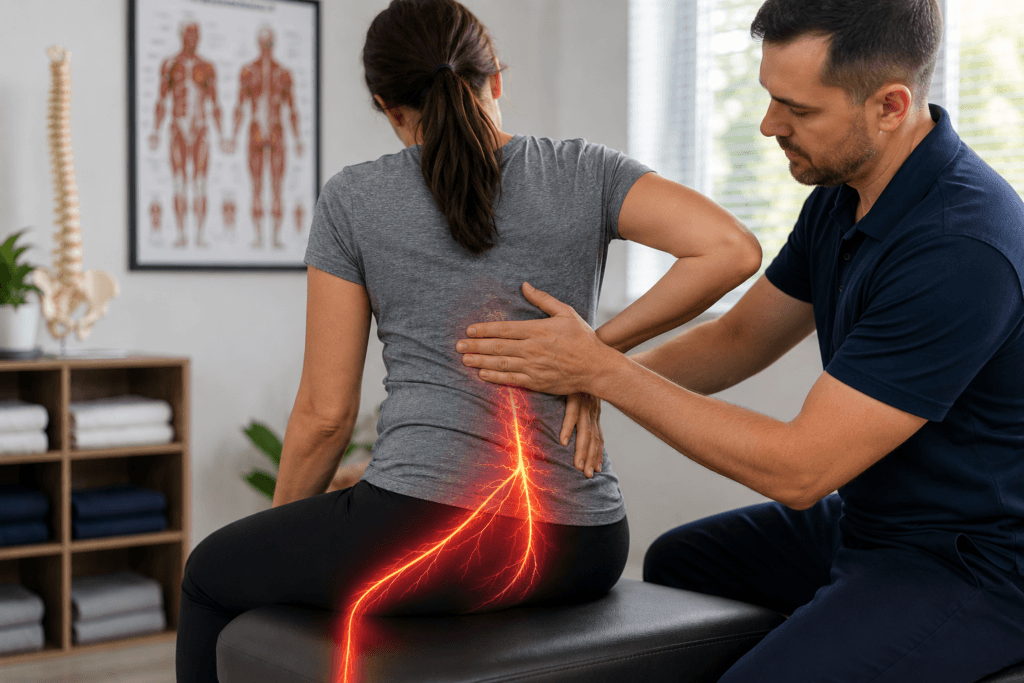
Sciatica is one of the most common conditions affecting the lower back and legs, often causing pain that interferes with work, exercise, sleep, and everyday movement. While some people experience occasional discomfort, others deal with persistent symptoms that become increasingly difficult to manage over time.
At Renew Integrative Health, we take an integrative approach to sciatica treatment in Stouffville by focusing on identifying and treating the underlying cause of nerve irritation rather than only managing symptoms temporarily. Understanding what is causing sciatic nerve compression is one of the most important steps toward long-term recovery.
What Is Sciatica?
Sciatica occurs when the sciatic nerve becomes irritated, inflamed, or compressed. The sciatic nerve is the largest nerve in the body and travels from the lower back through the hips and down each leg.
When this nerve becomes irritated, symptoms can develop anywhere along its pathway. Many people describe sciatica as a sharp, burning, or radiating pain that travels from the lower back into the buttocks and down the leg.
Common sciatica symptoms include tingling, numbness, weakness in the leg or foot, and pain that worsens with sitting, bending, or prolonged movement. In some cases, symptoms may affect only one side of the body, while others experience more widespread discomfort and mobility limitations.
Because sciatica affects the nervous system, symptoms can vary significantly depending on the severity and location of the irritation.
Common Causes of Sciatica
Sciatica can develop for several different reasons, and identifying the specific cause is essential for creating an effective treatment plan. One of the most common causes is a herniated or bulging disc in the lower spine. When spinal discs shift or become damaged, they can place pressure on nearby nerves, including the sciatic nerve.
Spinal misalignment and joint dysfunction may also contribute to nerve irritation by creating abnormal movement patterns and increased stress throughout the lower back and pelvis.
Muscle tightness, particularly in the piriformis muscle located deep within the gluteal region, can sometimes compress the sciatic nerve and contribute to symptoms. This is often referred to as piriformis syndrome. Degenerative changes in the spine, including arthritis and aging, may also narrow the spaces surrounding the nerves and increase compression over time.
At Renew Integrative Health, we assess movement patterns, posture, joint mobility, and muscular function to better understand the factors contributing to sciatic pain.
How to Treat Sciatica
Effective sciatica treatment often involves a combination of therapies designed to reduce nerve irritation, improve mobility, and support long-term recovery.
Chiropractic Care
Chiropractic care helps improve spinal alignment and reduce pressure affecting the nervous system. Chiropractic adjustments may help restore joint mobility, reduce tension, and improve movement patterns contributing to sciatic nerve irritation.
At Renew Integrative Health, chiropractic treatment is commonly used to help patients improve mobility and reduce discomfort associated with lower back dysfunction.
Physiotherapy
Physiotherapy focuses on strengthening the muscles that support the spine while improving flexibility, stability, and movement control. Weakness, poor posture, and dysfunctional movement patterns can all contribute to ongoing sciatic pain.
Our physiotherapy programs are designed to help patients improve function, reduce strain on the lower back, and support long-term recovery.
Massage Therapy
Massage therapy can help reduce muscle tension and soft tissue restrictions that may be contributing to sciatic nerve irritation. Tight muscles in the lower back, hips, and gluteal region often place additional stress on surrounding structures and affect mobility.
Massage therapy is frequently combined with other treatments to improve flexibility, reduce discomfort, and support recovery.
Osteopathy
Osteopathy focuses on restoring balance, mobility, and structural function throughout the body using gentle hands-on techniques. Osteopathic treatment may help improve joint mobility, reduce tension patterns, and support overall nervous system function.
By addressing how different areas of the body work together, osteopathy can help improve movement efficiency and reduce stress contributing to sciatic symptoms.
Acupuncture
Acupuncture is often used to help reduce inflammation, regulate pain signals, and support nervous system recovery. Many patients find acupuncture beneficial for managing sciatic pain, muscle tension, and associated discomfort.
As part of an integrative treatment plan, acupuncture may help support relaxation, circulation, and overall symptom relief.
When Should You Seek Treatment?
Sciatic symptoms should not be ignored, especially when they begin interfering with daily activities or mobility. You should seek professional care if pain radiates down your leg, symptoms persist for more than a few days, or you experience numbness, tingling, or weakness.
Early treatment can help prevent symptoms from becoming more severe or chronic while improving recovery outcomes and overall function.
At Renew Integrative Health, we work with patients to identify the underlying cause of sciatic nerve irritation and create treatment plans tailored to their specific needs and goals.
Sciatica Treatment in Stouffville
Sciatica can affect every aspect of daily life, but the right treatment approach can help reduce nerve irritation, improve mobility, and support long-term recovery.
At Renew Integrative Health, our integrative approach combines multiple therapies to help patients move more comfortably and restore overall function. Whether your symptoms are new or ongoing, our team is here to help you find the right path toward recovery.
To learn more about sciatica treatment in Stouffville or to book an appointment, visit our website and contact us today!