
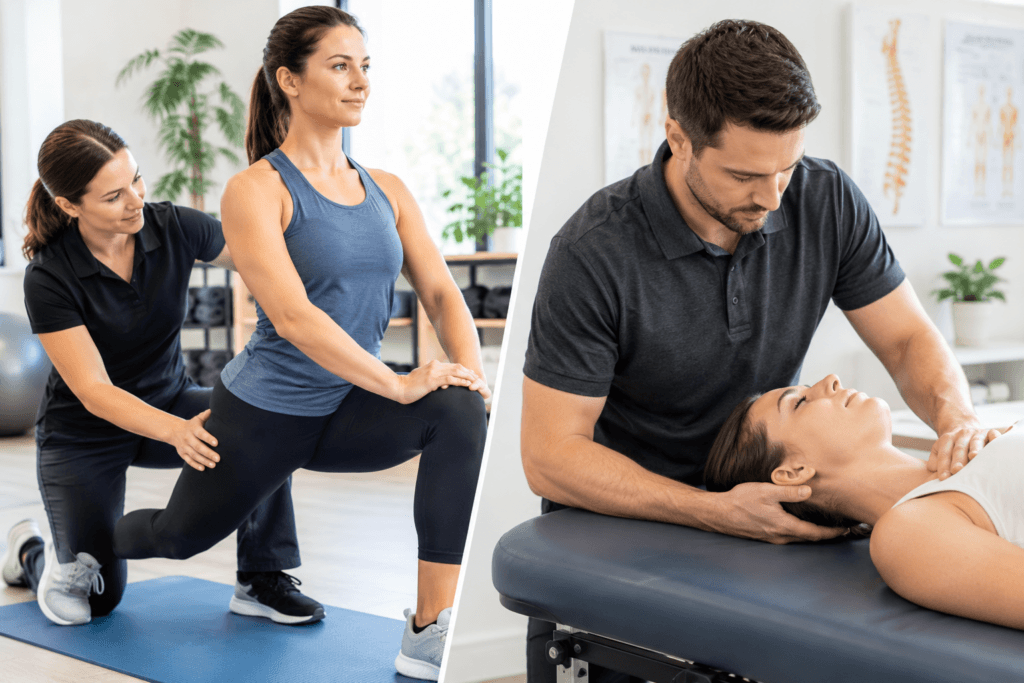
Physiotherapy and osteopathy are both hands-on, movement-focused approaches to musculoskeletal care, and they overlap more than most people expect. In general, physiotherapy tends to centre on assessing how you move and building strength and function through exercise and education. Osteopathy tends to centre on gentle hands-on techniques and how different parts of the body relate to one another. Neither is better than the other, and neither replaces a medical diagnosis.
What is physiotherapy?
Physiotherapy focuses on movement, strength, and function. A physiotherapist usually starts with an assessment of how you move, where you feel limited, and what activities you want to get back to. From there, treatment is built around your goals.
A physiotherapy plan may include:
- exercises to improve strength, flexibility, and balance;
- hands-on techniques such as joint or soft tissue work;
- advice on posture, daily activities, and returning to sport or work;
- a home program so you can keep progressing between visits.
People commonly see a physio for sprains and strains, sports injuries, back or neck pain, and rehabilitation after an injury or surgery (when their doctor or surgeon agrees).
What is osteopathy?
Osteopathy is a manual approach that looks at the body as a connected whole. Rather than focusing only on the spot that hurts, an osteopath considers how joints, muscles, connective tissue, and posture may influence one another. For example, a stiff hip may be considered when assessing lower back discomfort.
Osteopathic treatment is typically gentle and hands-on. Techniques may include soft tissue work, gentle stretching, and joint mobilization, and the exact approach varies by practitioner and by patient. Your practitioner can explain what they plan to do and why before they begin.
People commonly look for osteopathy when dealing with ongoing stiffness, muscle tension, or aches that don’t seem to stay in one place.
Physiotherapy vs. osteopathy: key differences
Both physiotherapy and osteopathy can help address physical discomfort and movement concerns, but their approaches differ. Physiotherapy typically focuses on improving movement, strength, and physical function.
- Common techniques: Exercise, patient education, and manual therapy.
- What to expect: Appointments are often active, with guided exercises and recommendations to practise at home.
- Common reasons for treatment: Injury recovery, rehabilitation, and sports-related concerns.
Osteopathy takes a broader approach, considering how different structures of the body work together.
- Common techniques: Gentle, hands-on treatment techniques.
- What to expect: Appointments are generally more practitioner-led, with an emphasis on manual treatment.
- Common reasons for treatment: Stiffness, muscle tension, and discomfort that may involve multiple areas of the body.
Which approach is right for you? The best choice depends on your symptoms, goals, and individual needs. Both disciplines can support mobility and physical well-being, and there may be overlap in the conditions they address.
These are general patterns, not strict rules. Individual practitioners combine approaches in different ways, so a physiotherapist may use a lot of hands-on work, and an osteopath may suggest movement or stretching to do at home.
Where do they overlap?
Both professions assess your movement, ask about your history, and tailor treatment to you. Both may use manual techniques, and both may give you advice to support your recovery. Because of this overlap, many people are happy with either, and some use both at different points in their care.
When to see your doctor first
Physiotherapy and osteopathy are not substitutes for a medical diagnosis. See your doctor, or seek urgent care, if you have pain after a significant fall or accident, sudden weakness or numbness, loss of bladder or bowel control, or symptoms that are getting worse or feel unusual to you. A practitioner can also refer you back to your doctor if something needs further investigation.
Physiotherapy and osteopathy at Renew Integrative Health
Renew Integrative Health is a multidisciplinary clinic in Stouffville, which means physiotherapy, osteopathy, and other services are available under one roof. If you’re unsure where to start, speak with the clinic about your symptoms and goals, and they can help you find a good starting point. You can also book an assessment online.
FAQs
What is the difference between physiotherapy and osteopathy?
Physiotherapy generally focuses on movement, strength, and function, often with exercises and education. Osteopathy generally focuses on gentle hands-on techniques and how different parts of the body relate to one another. The two overlap, and individual practitioners combine approaches in different ways.
Is physiotherapy or osteopathy better for back pain?
Neither is better for everyone. Back pain has many possible causes, and the right approach depends on your assessment, history, and preferences. A practitioner can talk through whether physiotherapy, osteopathy, or another service may be appropriate.
Can I see both a physiotherapist and an osteopath?
Many people do, either at the same time or at different stages of recovery. Your practitioners can help coordinate your care so the approaches work together.
Do I need a doctor’s referral to see a physio or osteopath in Stouffville?
A referral is not always required, but requirements can depend on your insurance plan or other coverage. Check your plan or ask the clinic before booking.
What should I expect at a first visit?
Expect questions about your symptoms, health history, and goals, followed by a physical assessment. Your practitioner will explain what they find and recommend next steps, and you can ask questions at any point.
Is osteopathic treatment painful?
Osteopathic treatment is typically gentle. If something feels uncomfortable, tell your practitioner so they can adjust the approach.